

Mission and role
Our role in the pension system
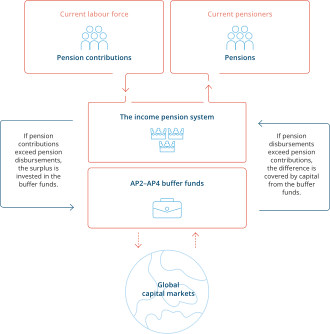
The Swedish pension system is designed to be financially stable over the long term. Pensions are based on lifetime income and are influenced by both economic and demographic developments. The system is built to remain robust even during periods of significant deficits, when generations with smaller cohorts must support those born during periods of higher birth rates. The buffer funds play an important role in financing such deficits and safeguarding pension payments over time for future generations.
The national pension system consists of the income pension, the premium pension and the guaranteed pension. Pensions are financed through employer contributions amounting to 18.5 per cent of salaries. The majority, 16 per cent, is allocated to the income pension, which finances current pension payments, while 2.5 per cent is allocated to an individual premium pension account. If no active choice is made, the premium pension is managed by AP7. The guaranteed pension is financed through the state budget.
AP2, AP3 and AP4 manage the buffer capital for the income pension and thereby contribute to balance between generations.
Solid returns contribute to a stronger pension system
Through strong returns, the combined capital of the AP Funds has increased from SEK 535 billion in 2001 to more than SEK 2,200 billion in 2025. The AP Funds have thus contributed to a surplus in the pension system and to its long-term stability.
FAQs
The national pension system is financed through contributions on income. In total, 18.5 per cent of earnings is allocated to pensions: 16 per cent to the income pension and 2.5 per cent to the premium pension.
The income pension is the largest component and is financed collectively within the pension system. The premium pension is invested in funds in the name of the insured individual. The guaranteed pension provides a basic level of income for those who have had low or no earnings.
The pension system is affected by the balance between the number of people who are working and contributing, and the number of people receiving pensions. When fewer people support a growing number of pensioners, pressure on the system increases.
Your pension is based on your earnings throughout your working life. Both the length of your working life and how much you earn affect the size of your pension.
The buffer funds contribute to the stability of the pension system. They reduce its sensitivity to economic and demographic changes, for future generations.
The “brake” is an automatic balancing mechanism that is activated when the pension system’s liabilities exceed its assets. In such cases, pensions are increased at a slower rate until the balance is restored.